Why would you want a computer with a teeny-tiny screen, storage to match and a weak processor?
Because sometimes it's the right tool for the job.
Enter the netbook, the current darling of the PC industry. In fact, it maybe the only glimmer of hope in an otherwise dismal forecast for PC sales, according to industry analysts Gartner Group.
Desktops, says Gartner, are out, predicted to drop nearly 32 per cent this year with notebooks rising 2.7 per cent. Dig a little deeper and the real story behind the headline is that netbook sales are expected to jump almost 80 per cent — obscuring the reality that standard notebooks sales are also softer than an ice cream at a Canada Day picnic.
So what's the big deal about this little machine? For one, price. They start at under $400, for which you'll get a machine which looks like a standard laptop but is slightly smaller and lighter. What you give up are processor speed and memory, meaning you're not going to edit video or large format images on it or play video games.
And that may sound like a lot when full fledged notebooks are selling for around $450, but in that category if you want smaller and lighter you pay a premium, thus the MacBook Air sells for about $1,999 while the super thin and slightly lighter 2.15-pound Toshiba Protégé R500-S5007V is about $2,549 and the just-launched Dell Adamo, touted as the world's thinnest laptop, with a chassis milled from a single piece of aluminum and solid state drive, kicks off at $2,499.
Still, that's the point. The netbook is intended to be just what its name implies — a network appliance, an input-output device that accesses the Internet. This is what the industry calls a thin client: a tool to access bigger, more powerful machines over a network, either via Wifi, Ethernet cable or in some cases a USB gizmo that links to the Net via cellphone frequencies.
As such, its size and weight — two to three pounds — make the netbook perfect for toting in a purse or small briefcase, or for lounging on the couch watching a movie while simultaneously checking Facebook or catching up on e-mail. It's the quintessential student laptop, equally good for taking notes in class, Instant Messaging and just plain Web surfing. For some, the netbook will work well for completing lengthy assignments and writing papers — though beware the slightly cramped keyboards.
There's some argument around when and who launched the category, since Mississauga, Ont.-based Psion Teklogix Inc. had a product called the Netbook six years ago (and is suing the big gun makers for copyright infringement over the name, a battle Dell has undertaken to fight on behalf of all players) and Palm had similar concept. And Fujitsu had the Lifebook, also arguably a forerunner.
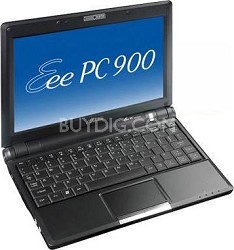
The spate of offerings that ignited the category, however, rolled out last year when motherboard maker Asus launched the Eeee book, followed quickly by the world's number three maker, Acer. Hewlett Packard, Dell, Lenovo and most recently Sony quickly followed, as have a host of smaller makers as the sector evolves.
"The mini-notebook market is dividing as vendors offer more systems with 9-inch to 10-inch screens in addition to those to with 7-inch to 8-inch screens," says Angela McIntyre, research director at Gartner. And buyers are responding to the larger sizes, despite the price increases. There's continuing downward pressure on prices, Ms. McIntyre says, and that will drive more sales.
While some of the features may be appealing to road warriors, such as weight and size and the ability comfortably flip open the screen on an airplane, consumers are the ones overwhelmingly buying netbooks.
"Security is an issue with XP Home," says Gartner analyst Mika Kitagawa. "And there just isn't enough [help] support from big makers available for it yet."
There are some seven inch screen models in market, but the most comfortable entry level is probably the 9-inch screen, because that offers close to a full size keyboard.
In pricing the systems there are a couple of wrinkles. First, some makers offer books at extraordinarily low prices — $279 for the Dell Inspiron Mini 9 Ubuntu Linux, for example, and that's because it's not running XP but Linux and has only 512 MB of memory with an 8 GB solid state flash drive.
There's nothing wrong with the configuration if all you want is e-mail and Web surfing, along with the basic word processing and spreadsheet applications that are available for free through Open Office. And you can always expand storage by slipping in a USB drive.
Obviously, as you add features like bigger screens, more memory and bigger hard drives, the price goes up accordingly. So the HP Mini 2140 with a 10.1-inch screen, an almost-full-size keyboard, 1 GB of RAM and the option for an 160 GB hard drive, an upgrade from the standard 80 GB solid state drive (like a USB drive, SSDs have no moving parts and so uses less power for longer battery life) will run about $550.
By comparison, the $439 Lenovo IdeaPad S10e is similarly configured but has an 160 GB hard drive, while the Sony Vaio P series comes with an 8-inch screen, 2 GB of RAM and an optional 120 GB SSD — but it starts at about $1,100.
And what you get is a cuter-than-a-button PC with which you'll never be more than a click away from your next eBay bid or your Facebook account, regardless of whether you're in the bathroom, bedroom, kitchen or living room.
Source:http://www.theglobeandmail.com/servlet/story/RTGAM.20090319.wgtnetbooks0319/BNStory/PersonalTech


)




 Posts
Posts


